Grateful Dead Bertha Meaning: The Skull & Roses Story

If you are searching for Grateful Dead Bertha meaning, you are probably running into three different things at once: the song “Bertha,” the skeleton-and-roses artwork, and the 1971 live album often called Skull & Roses. Deadheads use the names casually, so it is easy for a new fan, gift buyer, or collector to wonder: who is Bertha in the Grateful Dead world, and why does she show up as a skeleton surrounded by roses?
The short answer is that Bertha is both a song and an image in Deadhead culture. The song is a Garcia/Hunter Grateful Dead classic. The skeleton babe Bertha is connected to the Grateful Dead live album commonly known as Skull & Roses. The roses, skeleton, and old-timey decorative style became part of the band’s visual language, which is why Bertha flags, tin signs, patches, stickers, and wall art still feel instantly Deadhead today.

Quick Answer: What Does Grateful Dead Bertha Mean?
Bertha can mean different things depending on context:
- The song: “Bertha” is a Grateful Dead song with lyrics by Robert Hunter and music by Jerry Garcia, as credited on Dead.net.
- The album artwork: “Bertha” is also the skeleton babe associated with the 1971 self-titled live album commonly called Skull & Roses.
- The symbol: In fan culture, Bertha often means a mix of mortality, beauty, humor, road-tested freedom, roses, bones, and the strange warmth of Deadhead art.
- The decor style: On flags, tin signs, posters, and patches, Bertha usually points to the skeleton-and-roses artwork more than the song lyrics.
Bertha the Song vs. Bertha the Skeleton Artwork
This is the most important distinction. The song “Bertha” and the Bertha skeleton artwork are connected in Deadhead culture, but they are not the same thing.
Dead.net’s official song page credits “Bertha” to Robert Hunter for lyrics and Jerry Garcia for music. The song became a live favorite because it moves, bounces, and opens the door to a show with immediate lift. Dead.net’s “Greatest Stories Ever Told” discussion treats the song as essential and notes how much room there is for interpretation around it.
The skeleton artwork, meanwhile, is tied to the album known as Skull & Roses. The official Grateful Dead store describes that album as the record that introduced the world to the iconic skeleton babe Bertha. So when someone says “Bertha skeleton meaning,” they are usually asking about the artwork. When someone asks “who is Bertha Grateful Dead,” they may be asking about either the song or the character-like image.
What Is Skull & Roses?
Grateful Dead, released in 1971, is the band’s second live album. Fans commonly call it Skull & Roses because of the cover art. The official store description also notes that the album gave the band its first Gold record and helped give birth to the first official generation of Dead Heads through the famous “Dead Freaks” call.
That matters because Skull & Roses is not just a cool picture. It sits at a turning point where the Dead’s music, touring life, album art, and fan identity started locking together. Bertha became a visual shorthand for that world: bones, roses, dancing, motion, and the feeling that death itself had wandered into the show and decided to have a good time.
Where Did the Skull and Roses Artwork Come From?
The famous image predates the 1971 album. Artists Alton Kelley and Stanley Mouse created the 1966 Skull and Roses concert poster for Grateful Dead and Oxford Circle shows at San Francisco’s Avalon Ballroom. According to the Minneapolis Institute of Art, they adapted a 1900 illustration by Edmund J. Sullivan that originally accompanied an English translation of a Persian poem about the inevitability of death. Kelley and Mouse later reused the design for the 1971 live album cover.
That history explains why the artwork feels older than the psychedelic era. It brings together turn-of-the-century book illustration, San Francisco concert-poster art, and Grateful Dead iconography in a single image.

Skull and Roses Meaning in Deadhead Culture
There is no single official Skull and Roses meaning. A grounded reading starts with the image’s source: Edmund J. Sullivan’s original illustration accompanied a poem about the inevitability of death. The skull suggests mortality, while the roses suggest beauty, love, growth, and fragility.
In Deadhead culture, those opposites are often read as mortality and joy sharing the same space. The design is not only spooky or only pretty; it can suggest that life is temporary, beauty fades, music remains alive, and the road keeps moving. That interpretation fits the Dead’s playful, psychedelic, macabre, and life-affirming visual language, but it should not be mistaken for one official definition.
For collectors and decorators, skeleton and roses imagery often means:
- Classic Grateful Dead live-album energy
- Acceptance of life, death, and change
- Beauty blooming around bones
- A softer, more vintage alternative to the lightning-bolt Steal Your Face skull
- Deadhead identity that feels romantic, psychedelic, and old-school
Why Is the Skeleton Called Bertha?
The exact origin of the figure’s Bertha nickname is not clearly documented in the sources below. The official Grateful Dead store now calls her the “skeleton babe Bertha,” and fans commonly treat the album-cover skeleton as a named figure rather than a generic skull. That makes Bertha feel almost like a character in the Deadhead universe: not frightening so much as familiar.
Deadhead art often turns death symbols into companions. A skeleton can dance. A skull can grin. A rose can grow around bones. Bertha fits that tradition perfectly. She is beautiful and bony, strange and friendly, old and still moving.
That is also why Bertha decor works so well in listening rooms, garages, bars, dorms, festival camps, and studios. It carries more story than a plain logo. A Grateful Dead Bertha Flag 3×5 reads like a full piece of Deadhead history on the wall.
What Does the Song “Bertha” Mean?
The song is more elusive than the artwork. Dead.net’s “Greatest Stories Ever Told” article discusses how hard it is to pin down a single fixed meaning. Robert Hunter reportedly pushed back on simple explanations and suggested, cautiously, that Bertha might have a vaguer connection to birth, death, and reincarnation. That uncertainty is part of the song’s appeal.
Rather than flattening it into one answer, it is better to hear “Bertha” as a motion song: running, escaping, turning corners, feeling pursued, and needing to move. It has anxiety in the words but joy in the performance. That contrast is classic Grateful Dead. The song can sound like release even when the narrator is under pressure.
So if someone asks, “who is Bertha in the Grateful Dead song?” the honest answer is: not a neatly explained person. Bertha is partly name, partly force, partly joke, partly mystery, and partly a doorway into Hunter’s language.
Bertha vs. Steal Your Face vs. Dancing Bears
Bertha is part of the Deadhead symbol family, but she is different from the other major icons.
Steal Your Face is the skull with the lightning bolt. It is sharper, simpler, and more logo-like. It points toward electricity, recognition, live-show identity, and the band’s equipment-case history. If you want that story, read What Does the Steal Your Face Skull Mean?.
Dancing Bears are softer and more playful. They come from Bob Thomas’s back-cover art for History of the Grateful Dead, Volume One (Bear’s Choice), and fans often read them as joy, motion, dancing, and community. For that deeper dive, read Dancing Bears Meaning: The Story Behind the Iconic Grateful Dead Bears.
Bertha / Skull & Roses sits between those moods. It is darker than the bears, warmer than Steal Your Face, and more romantic than both. It is the image for fans who like the Dead’s skeleton art, rose imagery, vintage poster feeling, and the beautiful weirdness of life and death mixed together.
Why Bertha Flags and Tin Signs Make Strong Deadhead Decor
A good Deadhead room usually has layers: a flag, a sign, stickers, pins, maybe a record shelf, maybe lights, maybe a few roses and skulls worked into the wall. Bertha fits naturally because the image is big, readable, and symbolic without needing explanation.
Use Bertha decor when you want:
- A classic skeleton-and-roses focal point
- Deadhead wall art that is less common than Steal Your Face
- A softer gothic music-room look
- A gift for someone who already has Dancing Bear or Stealie pieces
- A vintage concert-poster feeling for a garage, bar, studio, or dorm
The Bertha Dead & Company Tin Sign is a strong small-space option because it works on a garage wall, behind a bar, above a record shelf, or in a music corner. The White Grateful Dead Bertha Flag works better when you want a larger backdrop.
Skull & Roses With Bears, Flags, and Modern Deadhead Art
Modern Deadhead art often remixes the classic symbols. You will see roses with Steal Your Face skulls, dancing bears inside skull-and-rose frames, Bertha-inspired wall art, Dead & Company tour references, and festival-style flags that blend several icons at once.
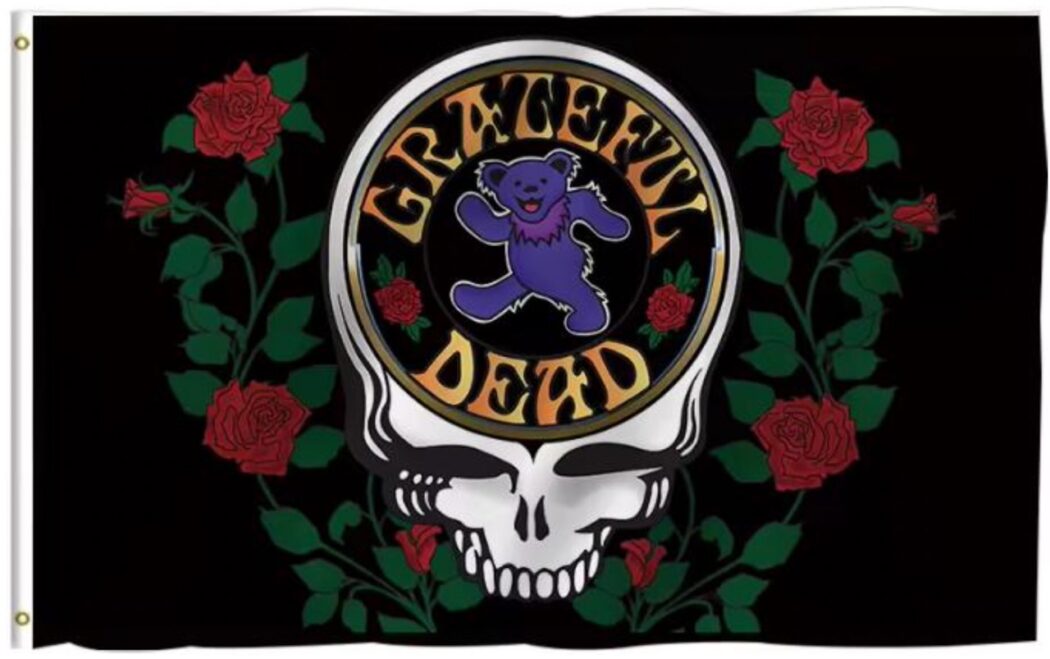
That is why a product like the Grateful Dead Dancing Bear Skull & Roses Flag makes sense. It is not trying to be the original album cover. It is part of the living fan-art language around the Dead: bears, skulls, roses, color, and room-sized display.
Best Bertha and Skull & Roses Gifts
If you are shopping for a Deadhead, match the gift to how they use their space.
- For a bedroom or dorm: choose a 3×5 Bertha flag or white Bertha flag.
- For a garage, bar, or music room: choose a Bertha tin sign.
- For a collector who already owns Steal Your Face gear: choose Skull & Roses or Bertha artwork to round out the collection.
- For a colorful festival setup: choose a mixed skull, roses, and dancing bear flag.
- For someone new to Deadhead symbols: pair a Bertha item with a Steal Your Face or Dancing Bears piece.
Browse the full Deadhead collection, the Grateful Dead flags collection, and the Deadhead tin signs section for more Bertha, Skull & Roses, Stealie, and Dancing Bear styles.
FAQ: Grateful Dead Bertha and Skull & Roses
Who is Bertha in the Grateful Dead?
Bertha can refer to the song “Bertha” or to the skeleton babe associated with the Skull & Roses album artwork. The song and the image overlap in fan culture, but they are not exactly the same thing.
What does Bertha skeleton mean?
The Bertha skeleton usually represents the classic skeleton-and-roses side of Grateful Dead imagery: mortality, beauty, humor, movement, and the band’s playful comfort with life-and-death symbolism.
What does Skull and Roses mean?
Skull and Roses combines death imagery with floral beauty. In Deadhead culture, it suggests life, death, music, decay, beauty, transformation, and a vintage psychedelic sense of humor.
Is Bertha the same as Steal Your Face?
No. Steal Your Face is the skull with the lightning bolt. Bertha is connected with skeleton-and-roses artwork and the Skull & Roses album image. Both are important Deadhead symbols, but they have different visual personalities.
What is the best Bertha gift for a Deadhead?
A Bertha flag is best for a large wall or festival backdrop. A Bertha tin sign is better for a bar, garage, record room, or smaller display area.