Viking Symbols & Norse Runes Explained: Mjölnir, Ravens, Fenrir, Runes & Their Meanings
If you love Viking jewelry, you have probably seen the same symbols again and again: Thor’s hammer, ravens, wolves, rune circles, axes, knotwork and shield-brooch shapes. The problem is that many online guides treat every Norse-looking mark as if it had one fixed ancient meaning. Real Viking symbols are more interesting than that. Some are firmly rooted in Viking-age objects. Some come from medieval stories about Norse gods. Some are modern gothic, biker, fantasy, or Celtic-Norse crossover designs inspired by that older world.
This guide explains the most useful Norse symbols and meanings for jewelry collectors: Mjölnir, Odin’s ravens, Fenrir, runes, Viking axes, brooches, and knotwork. It also separates historically attested Viking-age imagery from symbols that became associated with Norse culture later. That makes it easier to choose a necklace, pendant, brooch, or gift with meaning instead of just grabbing something that looks vaguely Viking.
Quick Guide to Viking Symbols and Meanings
Here is the short version before we go deeper:
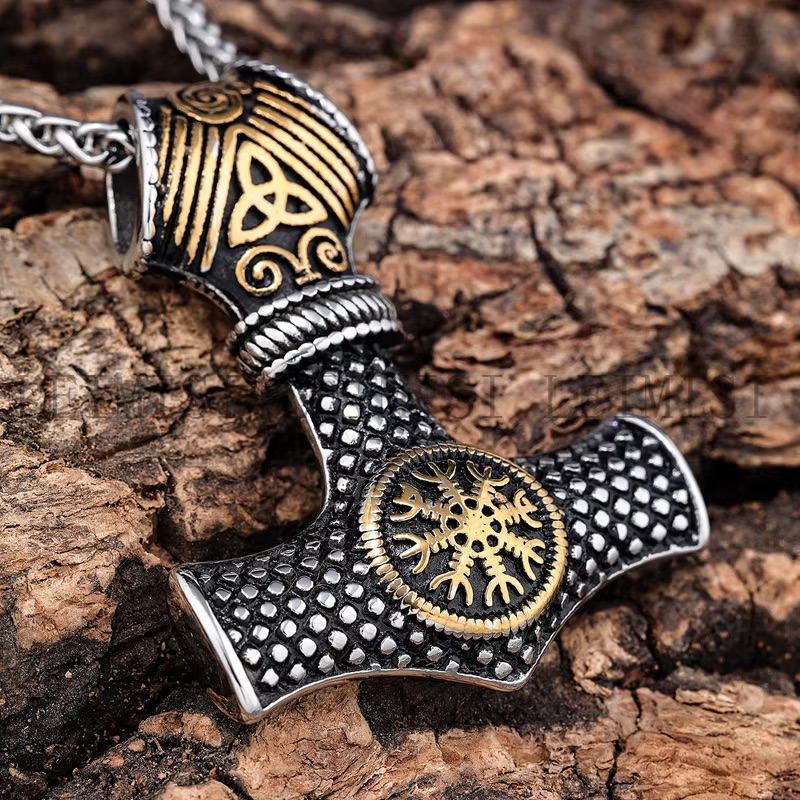
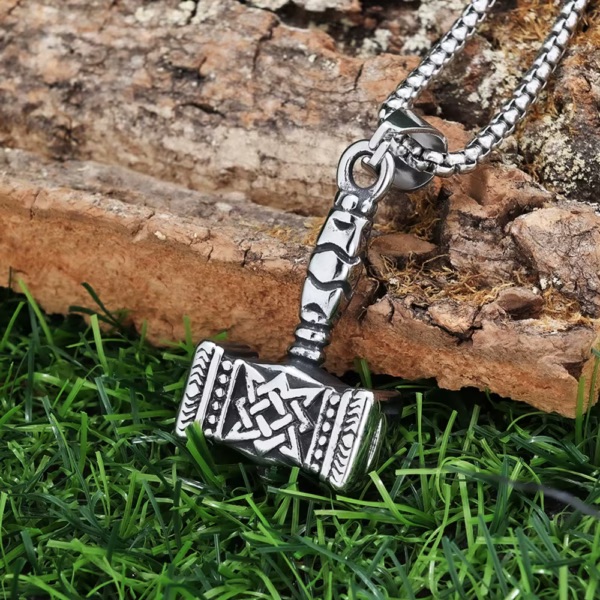
- Mjölnir / Thor’s Hammer: protection, strength, thunder, Thor, and, in some contexts, Norse religious identity during the Christianization period.
- Runes: a Germanic writing system used for inscriptions, names, memorials, ownership marks, and sometimes magical or protective language.
- Odin’s Ravens: wisdom, memory, thought, omens, battlefields, and Odin’s watchful presence.
- Fenrir: wild force, fate, rebellion, danger, and the unstoppable wolf of Ragnarök.
- Axes: warrior identity, survival, craft, travel, and modern Viking-style grit.
- Brooches and Shield Forms: clothing, status, everyday Viking-age dress, and decorative metalwork.
- Knotwork and Celtic-Norse Designs: interlacing, heritage, continuity, and modern crossover style rather than one single ancient meaning.
Historically Attested vs. Modern Norse-Inspired Symbols
This is the section most Viking-symbol guides skip, and it matters. Not every symbol sold as “Viking” was used by Viking-age people in the same way modern jewelry uses it.
Historically Stronger Viking-Age Imagery
Thor’s hammer pendants are one of the strongest examples. The National Museum of Denmark describes Thor as the protector of Midgard, the human world, and notes that Mjölnir amulets probably carried protective meaning. A famous example, Thurids Torshammer from Præstø, helps show why a Viking hammer necklace can be more than decoration.
Runes and rune stones are also firmly historical. The National Museum of Denmark explains that runes were a Germanic writing method and that Viking-period rune stones were raised in memory of the dead, often recording names, family ties, deeds, travel, status, or grief. That means a Viking rune necklace works best when understood as a style inspired by writing, memorial language, and symbolic marking rather than as a simple secret alphabet where every mark has only one meaning.
Brooches are also historically grounded. Viking-age dress used metal fittings, brooches, and fasteners, and modern Norse brooches echo that tradition even when the exact design is modern. If you want a piece that feels connected to how Viking-age objects were actually worn, browse pieces like the Norse Viking Amulet Style Brooch or the Viking Style Trefoil Celtic Brooch.
Symbols That Are Norse, Literary, or Modern-Style
Fenrir is absolutely part of Norse myth, but a Fenrir pendant is usually a modern interpretation of that myth. The wolf appears in medieval sources about Ragnarök, fate, and Odin’s death. A Fenrir design today often speaks to independence, untamed strength, and the darker side of Norse mythology.
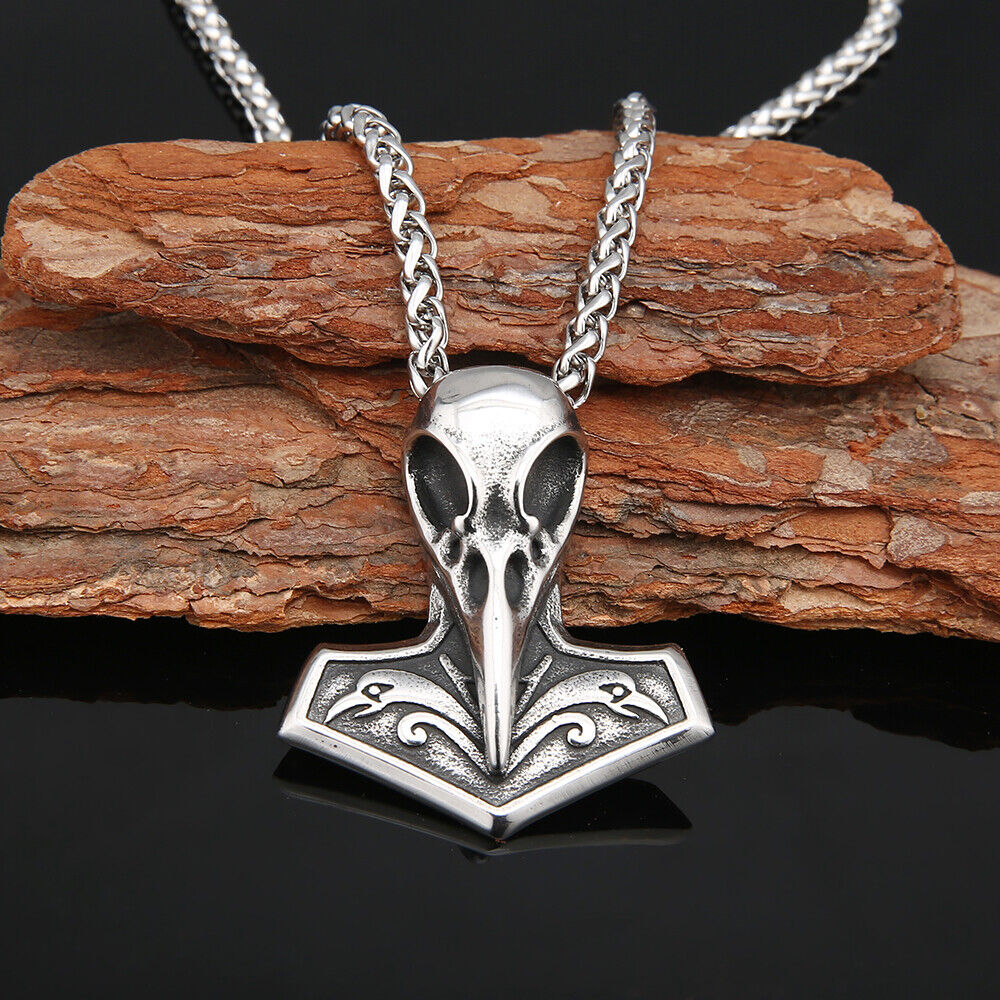
Raven skulls, gothic hammers, crossed axes, horned skulls, and mixed Celtic-Norse knotwork usually combine old inspiration with modern jewelry language. That does not make them fake. It just means they are best described honestly as Norse-inspired, Viking-style, gothic Viking, or Celtic-Norse crossover designs.
Not every raven image found in a Viking context can automatically be identified as Huginn, Muninn, or Odin.
Mjölnir Meaning: Why Thor’s Hammer Is the Classic Viking Necklace
Mjölnir is Thor’s hammer, the weapon associated with thunder, protection, and the defense of Midgard. In jewelry, the Thor’s Hammer meaning usually centers on strength, protection, courage, and connection to Norse mythology.
Historically, hammer pendants became especially visible around the Viking Age. The National Museum of Denmark notes that Thor’s hammers grew popular in the 900s as contact with Christianity increased, while Christians used crosses as signs of faith. That makes Mjölnir a powerful symbol because it sat at a crossroads of belief, identity, protection, and cultural change.
For modern wearers, a Thor’s Hammer Stainless Steel Necklace can mean several things at once:
- Protection and personal strength
- Respect for Norse mythology
- Interest in Viking-age material culture
- A bold alternative to a standard cross pendant
- A heavy-metal, biker, or gothic take on ancient symbolism
Viking Rune Necklace Meaning
Runes were not originally just decorative symbols. They were letters. The National Museum of Denmark describes runes as a Germanic writing method developed after contact with Mediterranean alphabets. Viking-age rune stones often preserved names, relationships, travel, memorials, and public statements of honor.
That is why rune jewelry feels different from a plain pattern. A rune-style pendant suggests writing, memory, name, fate, and hidden knowledge. In mythic storytelling, Odin is also strongly connected with runes and the pursuit of wisdom. In jewelry design, rune bands or rune circles can create the feeling of an inscription even when the pendant is not copying a specific historical rune stone.
A good way to explain a Viking rune necklace is:
- Historical level: inspired by a real writing system used by Germanic and Norse-speaking peoples.
- Mythic level: connected with Odin, knowledge, sacrifice, magic, and fate in later Norse stories.
- Modern jewelry level: used for mystery, protection, identity, and Viking-inspired style.
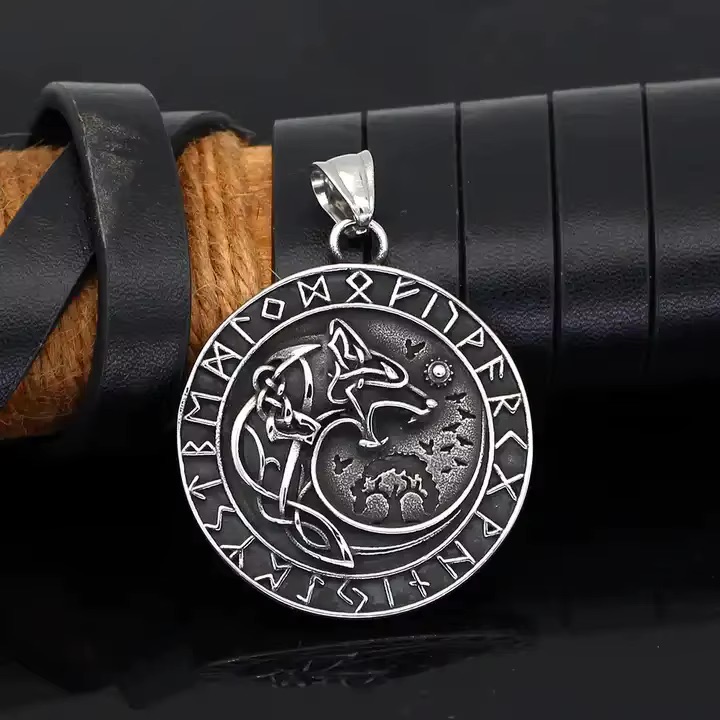
The Fenrir Viking Rune Necklace combines rune styling with the wolf of Ragnarök, so it belongs more to modern myth-inspired jewelry than strict archaeological reproduction. That is exactly why it works as a dramatic pendant.
Odin Raven Meaning: Thought, Memory, War, and Watchfulness
Ravens are among the most recognizable Norse symbols because Odin is associated with two ravens: Huginn and Muninn. Their names are often translated as thought and memory, or mind and memory. In Norse mythology, they fly through the world and return with news for Odin.
Ravens also fit Odin’s warlike side. They are carrion birds, so they naturally became linked with battlefields, death, omens, and the aftermath of combat. The British Museum’s description of a Viking raven coin notes the raven as a favored Viking symbol, which gives the raven stronger historical footing than many modern internet symbols.
In modern jewelry, a raven can mean:
- Watchfulness and awareness
- Wisdom, thought, and memory
- Odin and Norse myth
- Battlefield imagery and dark gothic symbolism
- A bridge between Viking and skull jewelry aesthetics
The Viking Hammer Raven Skull Necklace leans into that bridge. It is not a museum-copy artifact. It is a modern stainless-steel Viking-gothic pendant that pulls together Mjölnir, raven energy, and skull style.
Fenrir Meaning: The Wolf of Fate
Fenrir is not a cozy wolf mascot. He is one of the most intense figures in Norse mythology. Fenrir is the great wolf connected with Ragnarök, the collapse of the gods’ world, and the death of Odin. That gives Fenrir jewelry a different mood from a Thor’s hammer pendant.
Where Mjölnir often means protection and strength, Fenrir usually suggests raw force, destiny, defiance, danger, and freedom from chains. People are drawn to Fenrir designs because they feel untamed. The wolf is powerful, feared, wronged, bound, and eventually impossible to hold back.
For a gift, Fenrir works best for someone who likes darker Norse mythology, wolves, metal style, biker jewelry, gothic jewelry, or symbols of fierce independence. It is less “safe protection charm” and more “do not mistake quiet for weakness.”
Viking Axes and Warrior Symbols
Axes are strongly associated with Viking imagery because they were practical tools and weapons. A modern crossed-axes pendant is not necessarily an exact Viking-age emblem, but it does speak clearly in the visual language of raiding, travel, self-reliance, and battle-readiness.
Axes: historically practical tools and weapons; today commonly associated with warrior identity, self-reliance, strength and Viking-style imagery.
The Crossed Viking Axes Necklace is a good example of modern Viking-style jewelry. It is bold, direct, and easy to read from a distance. If Mjölnir feels religious or mythic, crossed axes feel more warrior-driven.

Celtic, Norse, and Knotwork Designs
Celtic and Norse art are not the same thing, but modern jewelry often blends them. Interlace, knots, animal forms, spirals, triquetras, shield shapes, and brooch forms all sit comfortably in a heritage-inspired jewelry collection. The key is not to overclaim. A Celtic-Norse piece may not be a precise Viking-age reproduction, but it can still carry meaning through connection, continuity, ancestry, craftsmanship, and old-world metalwork.
If you like that crossover style, look at pieces such as the Norse Triquetra Celtic Knot Stainless Necklace, the Viking Celtic Horned Skull Stainless Steel Necklace, or the Norse brooch options in the Norse collection.
Viking Celtic Brooches and Pins: How to Style Norse Knot Accessories.
How to Choose Viking Symbol Jewelry
Choose the symbol by the message you want the piece to send:
- Choose Mjölnir for protection, strength, thunder, and the most historically recognizable Viking necklace symbol.
- Choose runes for mystery, inscription, memory, language, and Odin-style wisdom.
- Choose ravens for thought, memory, watchfulness, battlefield energy, and dark Norse atmosphere.
- Choose Fenrir for rebellion, fate, wolf power, and a heavier mythological edge.
- Choose axes for warrior style, grit, and a more aggressive Viking look.
- Choose brooches for a historically grounded nod to Viking-age dress and metalwork.
If you are buying a gift, match the person first and the symbol second. A history lover may appreciate a Thor’s hammer or brooch. A gothic jewelry fan may prefer a raven skull hammer or horned skull pendant. Someone drawn to wolves and independence may connect more with Fenrir.
Ready to find the right symbol? Browse the Norse jewelry and accessories at There Be Skulls, or start with the Viking collection for hammer necklaces, rune pendants, brooches, axes, wolves, and Celtic-Norse designs.
FAQ: Viking Symbols and Norse Runes
What is the most historically accurate Viking symbol?
Thor’s hammer is one of the strongest choices for jewelry because Viking-age hammer pendants are well attested archaeologically. Runes and brooches are also historically grounded, though modern jewelry designs may stylize them.
What does Mjölnir mean on a necklace?
Mjölnir usually means protection, strength, Thor, thunder, and connection to Norse mythology. Historically, Thor’s hammer pendants were likely worn as amulets and as markers of identity during a period when Christian crosses were also spreading.
Are Viking runes magical?
Runes were first a writing system, not just magic symbols. Some sources and inscriptions connect runes with charms, protection, or ritual use, but a rune necklace should be understood as writing-inspired and myth-inspired unless it copies a specific historical inscription.
What does Odin’s raven mean?
Odin’s ravens are linked with thought, memory, wisdom, watchfulness, war, and the god Odin. Raven jewelry often blends historical Viking associations with darker modern gothic style.
What does Fenrir symbolize?
Fenrir symbolizes wild power, fate, danger, rebellion, and the unstoppable force of Ragnarök. A Fenrir necklace is a strong choice for someone who likes wolves, darker Norse mythology, and bold symbolic jewelry.
Did Vikings use all modern Norse symbols?
No. Some symbols are Viking-age or archaeologically grounded, while others are modern Norse-inspired designs. That is why it is better to say “Viking-style” or “Norse-inspired” for modern combinations like raven skull hammers, crossed axes, and Celtic-Norse skull pendants.